
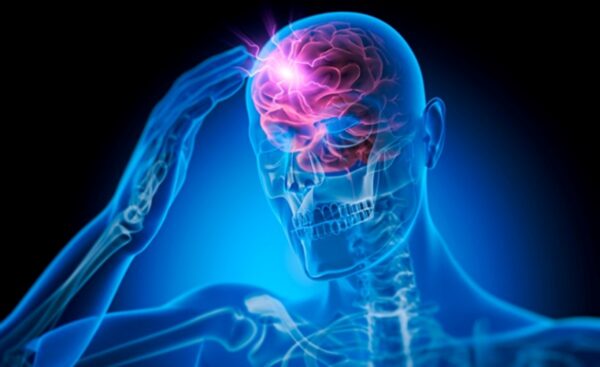
When most people picture a brain injury, they imagine a visible wound, a cracked helmet, something striking the head with obvious force. So when a car accident victim walks away from a collision without a scratch on their skull, the possibility of a brain injury barely crosses their mind. That assumption is one of the most dangerous misconceptions in accident medicine, and it causes thousands of people every year to ignore symptoms that point to serious neurological damage.
March is Brain Injury Awareness Month, a time the Brain Injury Association of America dedicates to educating the public about the realities of brain injuries, including how they happen and who they affect. The Maryland attorneys at Goldberg Finnegan represent crash victims with brain injuries with no direct impact to the head. These injuries are real, they're medically documented, and they deserve to be taken seriously.
How Your Brain Moves Inside Your Skull
The brain isn't rigidly locked inside the skull like a ball in a box. It floats in cerebrospinal fluid, surrounded by protective membranes, with enough room to shift, rotate, and bounce against the skull's interior walls. Under normal conditions, this fluid acts as a cushion. But during a violent collision, the forces acting on the body can overwhelm that cushion entirely.
When a car is rear-ended at even moderate speed, the occupant's body is thrust forward while their head lags behind for a fraction of a second before snapping forward and then backward. That rapid acceleration and deceleration creates forces strong enough to cause the brain to slam against the inside of the skull, stretch and twist within its fluid environment, and tear the microscopic nerve fibers that connect different regions of the brain.
This is called an acceleration-deceleration injury or inertial brain injury, and it can happen without anything ever touching the victim's head.
The Most Common Non-Impact Brain Injury You've Never Heard Of
One of the most devastating forms of traumatic brain injury caused by these forces is called diffuse axonal injury. Axons are the long, thin nerve fibers that carry electrical signals between different parts of the brain. When the brain shifts rapidly inside the skull, those fibers can stretch beyond their limits and tear.
What makes diffuse axonal injury so dangerous is that the damage is microscopic. It happens across widespread areas of the brain rather than in one concentrated spot, which means it often doesn't show up on standard CT scans or even routine MRIs. Yet the consequences can be severe, including:
- Prolonged unconsciousness
- Permanent cognitive impairment
- Personality changes
- In the worst cases, a persistent vegetative state
Biomechanical research published in the Journal of Orthopaedic & Sports Physical Therapy has demonstrated that rear-end collisions can produce brain strain levels comparable to those seen in direct-impact sports injuries, reinforcing the medical reality that a blow to the head is not required for a serious brain injury to occur.
Accident Scenarios That Commonly Cause Non-Impact Brain Injuries
Understanding how these injuries happen in real-world crashes can help victims recognize when something is wrong, even without an obvious head wound. Common examples include:
- Rear-End Collisions: the sudden jolt from behind creates classic whiplash forces that whip the brain back and forth inside the skull, often without the head striking anything
- T-Bone and Side-Impact Crashes: lateral forces cause the brain to slam against the side of the skull, and rotational forces can twist the brain on its stem
- Rollover Accidents: multiple changes in direction and gravitational force subject the brain to repeated acceleration-deceleration cycles
- Airbag Deployment: while airbags save lives, their rapid inflation can cause concussive forces, especially when the occupant is positioned close to the steering wheel
- Falls Without Head Contact: a person who falls onto their back, shoulder, or buttocks can transmit enough force through the spine and into the skull to cause a concussion without ever hitting their head
Why These Injuries Slip Through the Diagnostic Cracks
Several factors combine to make non-impact brain injuries some of the most underdiagnosed injuries in accident medicine. CT scans, which are the standard first-line imaging tool in emergency rooms, are designed to detect bleeding, fractures, and major structural damage. They're not sensitive enough to detect diffuse axonal injuries or mild TBIs, which means a victim can receive a normal scan result while quietly suffering real neurological damage.
On top of that, symptoms of non-impact brain injuries frequently don't appear right away. Adrenaline and shock can mask pain and cognitive dysfunction in the hours immediately following a crash, and some symptoms take days or weeks to develop. Without a bump, bruise, or cut on the head, victims, family members, and sometimes even doctors don't think to look for a brain injury at all.
Symptoms to watch for after any car accident, regardless of whether your head was struck, include:
- Persistent or worsening headaches
- Memory problems and difficulty concentrating
- Sensitivity to light or noise
- Mood changes including irritability, anxiety, or depression
- Fatigue and sleep disruption
- Dizziness, balance problems, or nausea
- A general feeling of mental fogginess that doesn't lift
How Insurance Companies Use the "No Head Impact" Argument
If there's one thing insurance adjusters are skilled at, it's finding reasons to deny or downplay your claims. When a crash victim reports brain injury symptoms but there's no documented head strike in the medical records or the police report, insurers often seize on that gap. They equate "no head impact" with "no brain injury." Then they rely on an outdated understanding of how TBIs actually work.
They may point to a normal CT scan taken in the ER and argue that the imaging proves nothing happened to the brain. They may suggest the symptoms are caused by stress, pre-existing conditions, or exaggeration. This is why getting advanced imaging like an MRI or diffusion tensor imaging, along with a thorough neuropsychological evaluation, is so important. These tests can document injuries that standard scans miss and give your legal team the evidence needed to counter the insurance company's arguments.
What You Should Do if Something Doesn't Feel Right
If you've been in a car accident in Maryland and you're experiencing any cognitive, emotional, or physical symptoms that feel unusual, don't wait for them to go away on their own. Tell your doctor about the crash mechanism, including any sudden jolts, whipping motions, or violent stops, even if your head was never directly struck. Ask for a referral to a neurologist, follow through on all recommended testing, and keep a daily journal documenting your symptoms.
The Silver Spring lawyers at Goldberg Finnegan understand that the most serious injuries don't always come with visible proof. We've fought for clients whose brain injuries were dismissed, downplayed, and denied by insurance companies, and we know how to build the medical and legal case needed to recover the compensation they're owed. If you were hurt in a crash and something doesn't feel right, contact our legal team for a free case evaluation.
“They've helped us with several collisions in which I sustained neck injuries that ultimately required surgery. Goldberg Finnegan treated us with compassion and commitment to what was best for us.” — S.B.
⭐⭐⭐⭐⭐